Category: Trackers

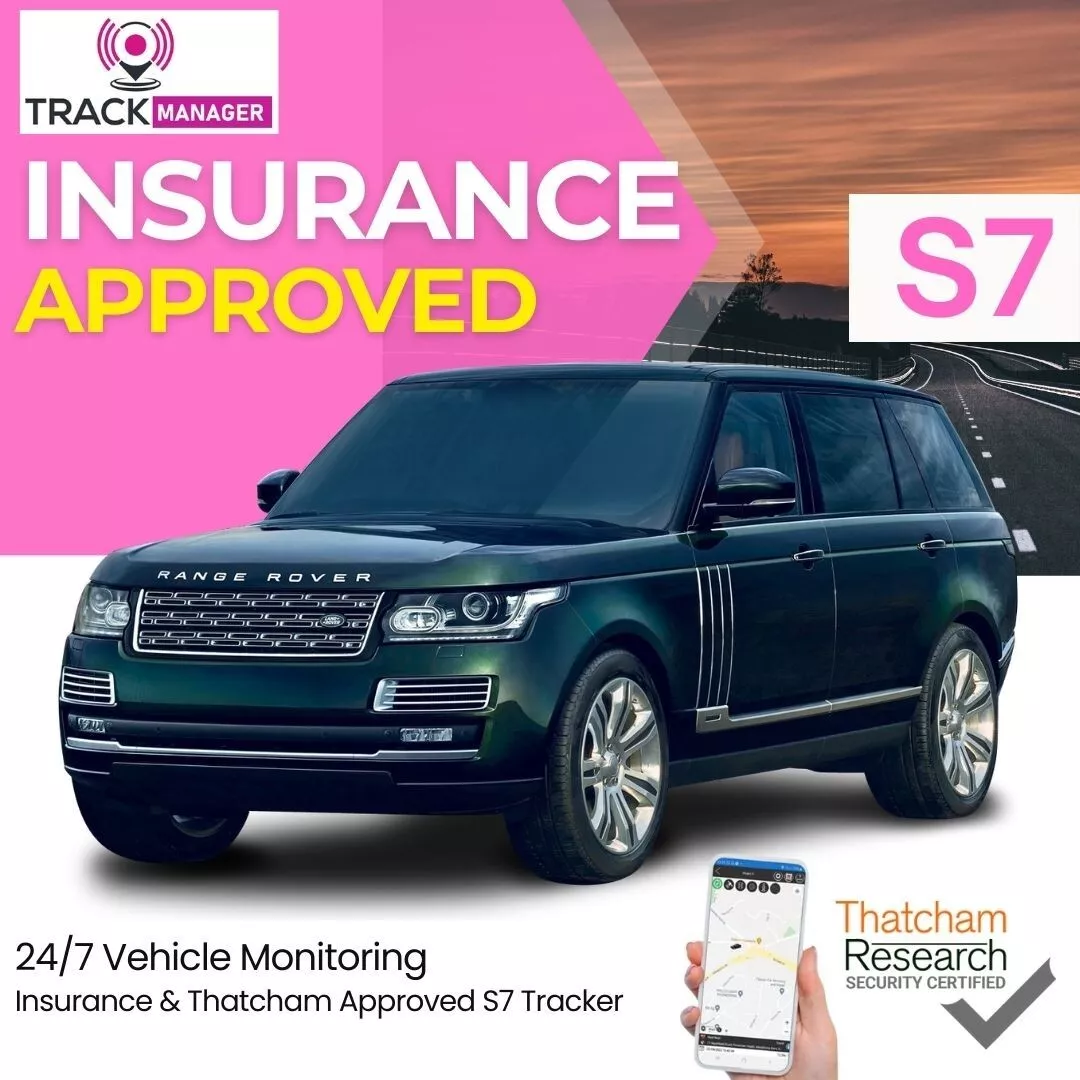
GPS tracker guides covering Thatcham S5 and S7 trackers, insurance requirements and vehicle recovery.

  • Secret Asset Trackers: The Last-Chance Backup When Everything Else Is Gone

    Most of what we fit is designed to stop a theft happening. A CAN-bus immobiliser means a relayed or cloned key starts nothing. A Thatcham S5 or S7 tracker means that if a vehicle does move without authorisation, someone is watching it in real time and the police get a live feed.

    But there’s a category of valuable item that neither of those covers. No permanent power supply. Nowhere to hide a conventional unit. Too small, too awkward, or too obviously modified the moment you bolt something to it. And for those, we’ve started fitting something new.

    What it actually is

    It’s a battery-powered asset tracker, and it is genuinely tiny. Small enough to disappear into places a conventional tracker simply cannot go. It needs no wiring and no power feed, so there’s no install scar, no spliced loom, and no giveaway that anything has been added.

    The part that matters most: it doesn’t look like a tracker. Anyone who has been in this trade a while knows that a thief who finds a tracker removes it in seconds. The value here is that even someone stripping an item down and looking carefully is very unlikely to identify what they’re looking at.

    Why there’s no photograph on this page

    You’ll notice we haven’t shown you one. That’s deliberate, and it’s the same policy we apply to our immobiliser product pages.

    The entire value of this device rests on the fact that a thief doesn’t recognise it. Publishing a clear photograph of an unusual-looking object and captioning it “this is a hidden tracker” hands that away to every person who might ever go looking for one. We’re not doing that. If you want to know exactly what it looks like before you buy, pick up the phone and we’ll describe it to you properly.

    Two years of battery, and it doesn’t start counting until you say so

    The unit runs for around two years on a single internal battery. In practice we’ve seen units go two to three years, but two is the figure we’ll stand behind, so plan around that.

    Better still, it uses no power at all until you activate it, and activation is a simple step you do yourself. That means it can sit in a drawer, or ship to you, or wait until the moment you actually need it, without burning a single day of its life. You start the clock, not the warehouse.

    How it reports its position

    This is where honesty matters more than sales talk, because this is not a GPS tracker and we’re not going to pretend it is.

    It works on a similar principle to an Apple AirTag. Rather than carrying its own SIM and satellite fix, it reports its position by quietly using the enormous network of Android and iPhone handsets already in the world around it. When a phone passes near enough, the tracker’s location is relayed up to the platform, and it appears in your app.

    What that gives you is a location that is accurate enough to put you in the right area — the right street, the right yard, the right unit. It is not the metre-perfect live feed you get from a wired S5 or S7 unit, and you should not rely on it as a live position. What it will do is tell you roughly where your property is, and crucially it keeps a location history, so you can see where it has been and the route it took. In a recovery situation, that history is often worth more than a single pin on a map.

    Coverage follows people. In a town, a city, an industrial estate, a motorway, a port — anywhere with phones passing — it reports well. Somewhere genuinely remote with nobody around, it will go quiet until something moves nearby. That’s the honest trade-off for a device this small with no power supply and a two-year life.

    Who it’s for

    Think of it as the last chance saloon. It’s for the item where, if the worst happened, you’d have nothing at all to go on.

    • Plant, tools and site equipment with no power supply to wire into
    • Trailers, horseboxes, caravans and towable kit left standing for long periods
    • Motorcycles, e-bikes and pedal cycles where there’s simply nowhere to hide a conventional unit
    • Classic and stored vehicles that sit for months with the battery disconnected
    • High-value cases, flight boxes and equipment that travels
    • Anything valuable enough that you’d want one more card to play

    One thing we’ll be straight about: this is a tracker for property you own. It is not a device for keeping tabs on another person. Covertly tracking someone in the UK is a criminal matter and a serious breach of data protection law, and we won’t supply or fit it on that basis. If that’s what you’re after, we’re not the installer for you.

    The third layer

    We don’t sell this as a replacement for anything. It’s an addition, and it works best as the third layer on top of what you already have.

    Layer one is the immobiliser — the theft doesn’t happen at all. Layer two is your Thatcham-approved tracker — if the vehicle moves, it’s monitored live and recovered. Layer three is this: the small, silent, unpowered thing that a thief never found, still quietly reporting in long after everything else has been ripped out, jammed, or left behind.

    Professional thieves know to sweep for trackers. They know what the common units look like and where they’re usually fitted. What they don’t sweep for is something they don’t recognise as a tracker in the first place.

    Price

    Ninety-nine pounds, fitted. That includes the two-year subscription and the phone app, with nothing further to pay during that period. You get live-style position updates and the full location history in the app from the moment you activate it.

    For a device that might be the only reason you ever see a valuable item again, we think that’s fair.

    Talk to us about it

    This one is new to the market and we’re still finding all the places it can be useful, so if you’ve got an awkward item you’ve never been able to protect properly, that’s exactly the conversation we want to have.

    Call Elite Car Security on 03330 129 028, or get in touch here. We cover Essex, Hertfordshire and North London from our base in Cheshunt, with over thirty years in the trade and TASSA approval, member number 0009.

  • TrackManager Hybrid Lockout: What’s the Best Tracker & Immobiliser System for Hybrid Vehicles?

    TrackManager Hybrid Lockout: What’s the Best Tracker & Immobiliser System for Hybrid Vehicles?

    Hybrid vehicles are hugely popular — and, like any high-value car, they’re a target for thieves. If you’ve invested in a hybrid, a basic tracker on its own isn’t enough. You want a system built specifically for hybrid vehicles that does two jobs: stops the car being driven away, and finds it if it’s ever moved.

    Why hybrids need a system built for them

    Hybrids aren’t just petrol cars with a battery bolted on. They run higher voltages, dual powertrains and more complex electrical architecture than a conventional car — so the security system you fit needs to be designed to work safely and reliably alongside that. A generic tracker adapted from a petrol setup isn’t the right fit. And most trackers are recovery-only anyway: they tell you where the car has gone after it’s already been taken. With hybrids targeted by relay and keyless attacks, you want to stop the theft happening in the first place, not just chase it afterwards.

    The answer: the TrackManager Hybrid Lockout system

    The TrackManager Hybrid Lockout system is designed specifically to work with hybrid vehicles and their increased voltages and dual-power setup. It gives you GPS tracking and an immobiliser in one complete package — a genuine two-in-one solution built around how hybrids actually work.

    That combination is the key. Very few installers can offer you an immobiliser together with a tracker — most only fit one or the other. The TrackManager Hybrid Lockout gives you both: live tracking for recovery, plus a lockout that stops your hybrid being driven away at all.

    Prevention and recovery, in one system

    • The immobiliser (prevention) — stops your hybrid being driven away. A relayed or cloned key gets a thief nowhere.
    • GPS tracking (recovery) — if the car is ever moved, a control room can locate and recover it.
    • Built for hybrids — designed for hybrid electrical systems and their higher voltages, not adapted from a standard petrol or diesel fit.

    Our recommendation

    If you drive a hybrid, don’t settle for tracking alone. The TrackManager Hybrid Lockout system gives you the complete package — prevention and recovery in one — built specifically for hybrid vehicles. We’re TASSA-approved with over 30 years in the trade, and we’ll give you honest advice on securing your hybrid properly.

    Get in touch: call 03330 129 028 or WhatsApp us to book your hybrid security fitting.

    See it in action

  • TrackManager EV Lockout: What’s the Best Tracker & Immobiliser System for Electric Vehicles?

    TrackManager EV Lockout: What’s the Best Tracker & Immobiliser System for Electric Vehicles?

    Electric vehicles are some of the most desirable cars on the road right now — and that makes them a prime target for thieves. They’re high value, often keyless, and the parts and batteries hold their worth. If you’ve invested in an EV, a basic tracker on its own isn’t enough. You want a system built specifically for electric vehicles that does two jobs: stops the car being driven away, and finds it if it’s ever moved.

    Why EVs need more than a standard tracker

    Most trackers are recovery-only. They tell you where the car has gone after it’s already been taken. That’s useful — but with a modern EV targeted by relay and keyless attacks, you really want to stop the theft happening in the first place, not just chase it afterwards. The strongest protection combines GPS tracking with an immobiliser, so the car can’t be driven off, and can still be located if a thief tries to lift or tow it.

    The answer: the TrackManager EV Lockout system

    The TrackManager EV Lockout system is designed specifically to work with electric vehicles. It gives you GPS tracking and an immobiliser in one complete package — a genuine two-in-one security solution built around how EVs actually work.

    That combination is the key. Very few installers can offer you an immobiliser together with a tracker — most only fit one or the other. The TrackManager EV Lockout system gives you both: live tracking for recovery, plus a lockout that stops your EV being driven away at all. For an electric vehicle, that’s exactly the layered protection you want.

    Prevention and recovery, in one system

    • The immobiliser (prevention) — stops your EV being driven away. A relayed or cloned key gets a thief nowhere.
    • GPS tracking (recovery) — if the car is ever moved, a control room can locate and recover it.
    • Built for EVs — designed to work with electric vehicles specifically, not adapted from a petrol or diesel setup.

    Our recommendation

    If you drive an electric vehicle, don’t settle for tracking alone. The TrackManager EV Lockout system gives you the complete package — prevention and recovery in one — and it’s exactly the kind of layered security we’d fit to protect a high-value EV. We’re TASSA-approved with over 30 years in the trade, and we’ll give you honest advice on securing your electric vehicle properly.

    Get in touch: call 03330 129 028 or WhatsApp us to book your EV security fitting.

    See it in action

  • Does Your Insurance Require a Thatcham-Approved Tracker? S5 or S7 Explained

    Does Your Insurance Require a Thatcham-Approved Tracker? S5 or S7 Explained

    Most people only find out what a Thatcham-approved tracker is when a letter arrives from their insurer. The renewal is conditional, the wording mentions a “Thatcham S5” or “Category S7” device, and there’s a deadline attached. From there it’s usually a quick search, a lot of conflicting information, and a growing suspicion that everyone selling one is telling you their brand is the only one that matters.

    So here’s the honest version, from an installer’s point of view. There are three tiers of vehicle tracking, they do genuinely different jobs, and the difference between them matters far more than the badge on the box.

    The three tiers, plainly

    1. Self-monitored trackers (fleet trackers)

    This is the entry level, and it is not Thatcham approved.

    A self-monitored tracker reports its position to an app on your phone or to a fleet dashboard. You can see where the vehicle is, where it’s been, how long it sat somewhere, and often how it was driven. You can set a geofence so it pings you if the vehicle leaves a yard or a postcode.

    What it doesn’t have is a monitoring centre. If the vehicle is stolen at three in the morning, nobody is watching the screen except you. You’d notice when you noticed, and then it’s on you to ring the police and relay a location to them yourself.

    For a van fleet, a plant trailer, a company car being tracked for mileage records, or an owner who simply wants to know where their vehicle is, a self-monitored unit is genuinely useful and very cheap to run. What it will not do is satisfy an insurer who has asked for a Thatcham-approved device.

    2. Thatcham S7

    S7 is the first insurance-approved tier, and the jump from self-monitoring is bigger than it looks — because you’re no longer buying a device, you’re buying a service.

    An S7 device is connected to a 24/7 secure operating centre. If the vehicle moves without the ignition being switched on — lifted onto a flatbed, dragged onto a trailer, rolled off a driveway — that’s an unauthorised movement. The centre sees it immediately and you get a phone call. If you confirm you haven’t authorised it, the theft is logged and the recovery process starts, with the centre liaising directly with the police.

    S7 also covers the obvious tampering: battery disconnection, power loss, the unit being interfered with. All of it flags. For a lot of vehicles, S7 is exactly what the insurer has asked for and exactly what’s needed.

    3. Thatcham S5

    S5 is everything S7 does, plus the thing that actually matters on a modern car: Automatic Driver Recognition.

    With S5 you carry a driver ID — a tag on your keyring, or a card in your wallet, depending on the system. The tracker looks for that ID whenever the vehicle is driven. Here’s why that changes everything.

    Modern vehicle theft is very rarely someone breaking a window and hot-wiring a car. It’s relay attacks, key cloning, keyless repeaters and OBD programming. In almost all of those, the car is started and driven away perfectly normally, with the ignition on and the vehicle’s own systems perfectly happy. An S7 tracker sees a legitimate journey. It has no reason to alert anybody.

    An S5 tracker sees a journey with no driver ID present. That’s an unauthorised drive-away, and you get the phone call — while the vehicle is still moving and still recoverable.

    That single difference is why insurers specify S5 on high-value, high-performance and high-theft-risk vehicles. It’s aimed squarely at the way cars are actually being stolen now. Many S5 systems also support police-approved remote immobilisation and detect signal jamming, which thieves increasingly use to try to blind a tracker after the fact.

    Side by side

    Self-monitored / fleetThatcham S7Thatcham S5
    Insurance approvedNoYesYes
    Live GPS locationYesYesYes
    24/7 monitoring centreNoYesYes
    Alert if towed or liftedApp notification onlyPhone call from centrePhone call from centre
    Alert if driven without your tagNoNoYes
    Driver ID tag or cardNoNoYes
    Police liaison for recoveryYou do itYesYes
    Tamper and battery-cut alertsLimitedYesYes
    Additional immobilisation can be fittedYesYesYes
    Typical useFleet, mileage, peace of mindInsurer-mandated coverHigh-value and high-risk vehicles

    Immobilisation can be added to any of the three

    One point that gets missed: immobilisation isn’t tied to the tier you choose. An immobilisation circuit can be fitted alongside a self-monitored fleet tracker just as it can alongside an S7 or an S5.

    That means the vehicle can be prevented from restarting once it has come to a stop — so a thief who pulls over, parks up and comes back for it later finds a vehicle that won’t go anywhere. On S5 systems it’s normally part of the approved specification and can be used during a live police recovery.

    Worth saying clearly, though: if immobilisation is what you actually want as your main defence, a tracker is the wrong place to start. A dedicated CAN-bus immobiliser — an Autowatch Ghost II or a Nitro Pro — is a stronger and cheaper answer to that particular problem, because it stops the vehicle being driven in the first place rather than helping you get it back afterwards. Plenty of our customers run both: an immobiliser to prevent the theft, a tracker to recover the vehicle if someone gets it onto a trailer regardless.

    Which one does your insurer actually want?

    Don’t guess this, and don’t take a salesman’s word for it either. Read the policy wording or the letter, and if there’s any ambiguity, ring the insurer and get it in writing. They will normally specify:

    • The category — S5 or S7
    • That it must be professionally installed, often by a TASSA-approved or otherwise accredited installer
    • That the subscription must remain active for the life of the policy

    That last one catches people out. A Thatcham tracker without a live subscription is not an approved tracker — it’s a dead box in a dashboard. If the subscription has lapsed at the moment of a theft, you may find the claim disputed. Insurers frequently ask for a certificate of installation and proof of an active subscription, so keep both somewhere you can find them.

    Does the brand actually matter?

    This is the question we get asked most, and the honest answer isn’t the one most companies give. The UK market includes, among others:

    • SmarTrack
    • Meta Trak
    • Track Manager
    • Vodafone Automotive
    • Scorpion Automotive
    • Moving Intelligence
    • Tracker Network
    • Trakm8
    • Autowatch
    • Eco Trac
    • Moto Halo

    There is no single best product. That isn’t a dodge — it’s the whole point of the Thatcham standard. Approval means a device and its monitoring service have been independently tested against a fixed benchmark. An S5 from one manufacturer and an S5 from another have both cleared the same bar. Neither is “more approved” than the other.

    What actually differs between them is smaller and more practical than the marketing suggests:

    • How you carry your driver ID. Some use a tag for your keyring, some a card for your wallet. Sounds trivial. It isn’t — it’s the thing you’ll interact with every single day, and a customer who finds it annoying is a customer who leaves it in the house.
    • The app. Some are excellent, some are clunky.
    • Subscription cost, and whether it’s monthly, annual or multi-year.
    • Customer service, which you’ll only appreciate when something goes wrong.
    • Physical size, which determines how well the unit can be concealed.

    Beyond that, a GPS tracker is a GPS tracker. They all find satellites and they all report over the mobile network.

    Where the real difference is: the installation

    Here’s the part that genuinely affects how well your system works, and it has nothing to do with the brand.

    Different tracking systems integrate with different vehicles in different ways, particularly where immobilisation is involved. Some units work beautifully on one manufacturer’s CAN system and throw faults on another. Some need a different approach on a hybrid or an EV. Some are far easier to conceal in one model than another.

    An experienced installer knows which unit behaves itself in your specific vehicle, and that knowledge prevents the problems that make people hate their tracker: spurious alerts, warning lights, batteries draining, systems that need constant attention.

    So the sensible order is: ask the installer first, then pick the product. Not the other way round. Choosing a brand because you’ve heard the name, or because you had one on a previous car, is how you end up with a system that’s a poor fit for the vehicle it’s going into.

    Elite Car Security is TASSA approved (member no. 0009) with over 30 years in vehicle security, and we’re mobile — we come to your home or workplace across Essex, Hertfordshire and North London and fit the system there.

    Why we rate Track Manager

    We fit a range of systems and we’ll always recommend what suits the vehicle. That said, if you asked us which one we reach for most often, it’s Track Manager — for reasons that are entirely practical:

    • 4G devices. Worth more than it sounds. Older 3G units are living on borrowed time as networks retire 3G, and a tracker is no use at all if it can’t get a signal out.
    • Reliable, with a low fault rate in service.
    • Small and compact, which means far more options for concealing it properly.
    • Outstanding customer service — the thing you notice when you actually need them.
    • Competitive subscriptions.

    But the feature we like most is this: you can move between tiers at any time.

    Start with a self-monitored fleet tracker because that’s all you need today. If your insurer later asks for an S7, or your next renewal demands an S5, the system can be upgraded — rather than you paying out again for a completely different tracker and a second installation. Moving up to S5 doesn’t even need another visit: the driver ID tags are simply posted out to you. It works the other way too. If you sell the high-value car and the requirement drops away, you can come back down a tier instead of paying for cover you no longer need.

    For anyone whose insurance requirements might change — or who isn’t sure yet what they’ll be asked for — that flexibility is worth a great deal.

    Frequently asked questions

    Will any tracker satisfy my insurance?
    No. A self-monitored or fleet tracker, however good, is not Thatcham approved and will not meet an insurer’s requirement for an S5 or S7 device.

    What’s the actual difference between S5 and S7?
    S7 alerts you when the vehicle moves without the ignition on — being towed or lifted. S5 does that too, and adds driver ID tags, so it also alerts you when the vehicle is driven away without your tag present. That covers relay and key-cloning theft, which S7 does not.

    Do I have to pay a subscription?
    Yes, for any Thatcham-approved tracker. The approval covers the monitoring service as well as the hardware, and your insurer will expect the subscription to be active.

    Can I fit it myself?
    Not if it needs to satisfy an insurer. Approved installation by an accredited installer is normally a condition, and you’ll usually need a certificate of installation to prove it.

    Which brand is best?
    None of them, and all of them. Choose on subscription cost, how you’d rather carry your driver ID, and — most importantly — which system your installer knows works properly in your vehicle.

    Not sure what you need?

    Send us your insurer’s wording and your vehicle details and we’ll tell you straight which category you need and which system suits the car — including when the cheaper option is the right one.

    Call 03330 129 028 or WhatsApp 07506 555 717. TASSA approved, mobile fitting across Essex, Hertfordshire and North London.

  • Do AirTags Work as Vehicle Security? The Truth About Tracking Your Car

    Do AirTags Work as Vehicle Security? The Truth About Tracking Your Car

    With vehicle thefts on the rise across Essex, Hertfordshire and London, more and more owners are turning to alternative ways of tracking their cars — and one of the most popular questions we get asked is: “Can I just hide an Apple AirTag in my car?”

    The short answer: yes, an AirTag could possibly increase your chances of getting your car back. But there’s a lot more to it than that — and if you rely on an AirTag alone, you’re leaving a great deal to luck.

    What AirTags Do Well — and Where They Fall Short

    AirTags are cheap, easy to hide, and use Apple’s enormous Find My network to report their location. Some people genuinely have recovered stolen cars thanks to one. But those recoveries owe a lot to luck, and here’s why:

    • AirTags are discoverable. They’re designed with anti-stalking features, which means a thief’s phone can alert them that an unknown AirTag is travelling with them. Thieves know this, actively scan for them, and simply throw them out of the window.
    • No live GPS tracking. An AirTag only reports its position when an Apple device happens to pass nearby. Park the car in a lock-up or shipping container and it may go silent completely.
    • No professional recovery. There’s no monitoring team, no police liaison, no insurance recognition. It’s just a dot on your phone — if you’re lucky.

    The Proper Solution: A Professionally Fitted GPS Tracker

    If you want a genuinely high chance of getting your vehicle back, the correct thing to have is a professionally fitted, standalone GPS tracking system hidden within the vehicle. Unlike an AirTag, a proper Thatcham-approved tracker gives you live GPS positioning, its own independent power and signalling, a 24/7 monitoring team, and direct liaison with the police to recover your vehicle. Insurers recognise them too — many actually require one on higher-value vehicles.

    At Elite Car Security we supply and fit Thatcham-approved S5 and S7 tracking systems, professionally hidden within the vehicle, with our mobile fitting service covering Essex, Hertfordshire and North London.

    Thieves Now Scan for Trackers — Here’s the Answer

    There’s one more thing you need to know. Organised thieves now use high-tech detection tools and signal blockers to find and defeat GPS trackers. A common tactic is to steal the car, park it up somewhere quiet for a day or two, and sweep it for any transmitting device before moving it on.

    If you don’t have an immobiliser and you’re relying purely on a tracker, we strongly recommend an undetectable “sleeping” tracker. These clever systems stay completely dormant — emitting no signal at all — and only wake up at set intervals for a very short burst to ping in their location. Because the unit is silent the rest of the time, it’s completely undetectable to thieves scanning the vehicle, even with professional equipment.

    So when the thieves park your car up to check it for trackers, they find nothing. The tracker quietly wakes, reports its location, and we can then act to get the vehicle recovered — working with the police or your insurance company.

    The Verdict: Use Both

    An AirTag is a great little device — cheap, simple, and better than nothing. But it should never be your only line of defence. For the best chance of seeing your vehicle again, use your AirTag in conjunction with a professionally fitted GPS tracker. Let the AirTag be the decoy the thieves find and throw away, while the real tracker stays silently hidden, doing its job.

    And for the ultimate protection, pair your tracker with a TASSA-approved immobiliser like the Autowatch Ghost II or Nitro Pro — so the car never leaves in the first place. You can read more in our post on TASSA-approved immobilisers and insurance requirements.

    Talk to Us About Tracking Your Vehicle

    Elite Car Security has over 30 years’ experience in vehicle security and is TASSA approved (Member No. 0009). We fit Thatcham S5 and S7 trackers — including undetectable sleeping trackers — at your home or workplace across Essex, Hertfordshire and North London.

    Call us on 03330 129 028 or message us on WhatsApp: 07506 555 717 for honest, no-obligation advice on the right tracker for your vehicle.