Your Nitro Pro CAN-IMMO immobiliser tag runs on a small coin cell battery. Like any key fob battery it will eventually run down, but changing it takes a couple of minutes and you can do it yourself at home. Watch the short video below, then use the checklist to make sure you get it right first time.
Video: changing your Nitro Pro tag battery
Which battery does the Nitro Pro tag use?
The Nitro Pro tag takes a CR2032 3V lithium coin cell — one of the most common button batteries, available from supermarkets, chemists and online. We recommend a good-quality branded battery for the best life.
Signs your tag battery is running low
The tag isn’t being recognised as reliably as it used to
You have to hold the tag closer to the car or wait longer before you can drive away
It has been a long time since the battery was last changed
If you use a PIN code as well as, or instead of, the tag, keep it to hand — it means you can still drive the car if the tag battery dies unexpectedly.
Changing the battery: quick checklist
Have a new CR2032 battery and a small Phillips screwdriver ready before you start.
Undo the two small Phillips screws on the tag and put them somewhere safe — they’re tiny and easy to lose.
Slide the cover off the tag.
Gently pop the case apart to reach the battery — take your time so you don’t damage the clips or the circuit board.
Note which way up the old battery sits, then remove it.
Fit the new CR2032 the same way round, with the correct side facing up.
Pop the case back together, slide the cover back on and refit the two screws — snug, but don’t overtighten them.
Test the tag at the car before you set off.
Still having problems?
If your tag still isn’t working after a fresh battery, get in touch and we’ll help you sort it out. Elite Car Security is a family-run, TASSA-approved installer (Member No. 0009) with over 30 years of experience, fitting Nitro Pro immobilisers across Essex, Hertfordshire and North London.
Most people who ask us about the Autowatch Ghost 3 have the same question once they understand what it does: what is it like to live with? Will it slow me down every morning? What happens at the garage? What if I forget the code?
The honest answer is that after the first week you stop noticing it. This post walks through what owning a Ghost 3 looks like day to day.
Starting the Car
You unlock and get in exactly as you do now. Ignition on or start button pressed, then you enter your PIN sequence on buttons the car already has, such as the steering wheel controls, window switches or pedals. The car confirms it has accepted the code and you start the engine as normal.
It takes a couple of seconds. Get it wrong and nothing bad happens: switch the ignition off and start again. There is no lockout penalty for a fumbled attempt.
Without the code, the car simply will not run. That holds whoever has the key in their hand, whether it is your genuine key taken in a burglary, a signal boosted from your hallway in a relay attack, or a blank key cloned through the diagnostic port.
It Re-Arms Itself
There is no button to press when you walk away and nothing to remember. Once you switch off and leave the car, the Ghost 3 returns to its protected state on its own. The next person to try to start it, you included, needs the code.
It is not awkward on short stops, either. Stalling, a stop-start system cutting the engine at the lights, or switching off briefly at the fuel pump will not ask you for the code again while you are still using the car.
Garages, MOTs and Valets: Service Mode
You never need to give your code to anyone. Before you drop the car off, you put the Ghost 3 into service mode, which lets it start without the code. The garage drives it like any other car and has no idea the system is there.
When you get the car back, enter your code once and full protection is restored. As a safety net, the system also re-arms itself after a spell of continuous driving, so a car left in service mode by mistake does not stay unprotected for long.
Prefer Not to Enter a Code? Pair a Phone or Tag
The PIN is the heart of the Ghost 3, but it can also recognise a paired smartphone or tag. Where one is set up, the car disarms automatically when your phone or tag is with you, and falls back to your PIN when it is not.
We always set the PIN up properly even if you mainly use your phone, because it is what gets you moving if your battery dies or you leave the phone at home. If you use a tag, keep it apart from your car key: the two together hand a thief everything at once.
Changing Your Code
You can change your PIN sequence yourself whenever you like, and you should if you think someone has watched you enter it. It can be anything from 4 to 20 presses. If you would rather we did it with you, just call. And if you ever forget it, we can reset it.
What a Thief Sees
Nothing. There is no flashing LED on the dashboard, no sticker, no extra fob on your keyring and no radio signal for a scanner to pick up. The Ghost 3 talks to the car over its own data network, so there is no obvious box or cut wire to go looking for. We never publish where it is fitted or what the unit looks like, and we ask owners to do the same.
That is why it works. A thief who has defeated your keyless entry gets into the car, presses start, and the car does nothing. With no idea what is stopping it or where to look, the usual move is to give up and walk away.
Why the Ghost 3 Rather Than an Older Ghost?
The Ghost 3 is built for CAN FD, the faster data network on the latest cars, which the older Ghost II cannot cover. We always fit the highest Ghost generation your car supports, at the same £499 supplied and fitted, because it gives you the best chance of moving the system to your next car. If you want the technical detail, read what CAN FD changed and which Ghost your car takes, or compare it with the Nitro Pro and Pandora Microbot in our immobiliser comparison.
Every Ghost 3 we fit comes with a lifetime warranty, is registered with TASSA so your insurer can verify it, and is backed by the person who fitted it. Already have one? The full step-by-step instructions are in our Ghost owner’s handbook and on the Ghost help page.
Ghost 3 Fitting Across Essex, Herts and North London
We are a family-run, TASSA-approved installer (Member No. 0009) based in Cheshunt, with over 30 years in vehicle security. We come to your home or workplace, fit the Ghost 3 in a single visit, and set your code up with you before we leave. Find your local Ghost installer, or add recovery as well as prevention with our immobiliser and S7 tracker package.
Get a Price for Your Car
Send us your registration and we will confirm which Ghost your car takes before you commit to anything.
The Ford Focus ST is one of the great modern hot hatches, and this 2025 car is a rare one — we understand only around 300 are on the road in the UK. Its owner wanted it protected properly, so he booked us to fit a Nitro Pro immobiliser at his address in Hertfordshire.
Rare and desirable is exactly what thieves look for. Keyless relay attacks, key cloning and CAN injection all work on a factory-standard car, and a performance model that is hard to replace is worth more to a gang than an ordinary hatchback. An immobiliser is the layer that makes the car pointless to steal.
Watch: Nitro Pro Fitted to a 2025 Ford Focus ST
Watch: Nitro Pro immobiliser fitted to a rare 2025 Ford Focus ST in Hertfordshire
What the Demo Shows
The video is short, but it shows everything that matters about how the Nitro Pro behaves once it is fitted:
Locked out. With the Nitro Pro armed, trying to start the Focus ST does nothing at all. The car is completely dead.
Disarm with the PIN. Ignition on, enter the PIN sequence, and the hazard lights flash. The car then starts and runs normally.
Stays usable when you step out. Switching the engine off does not re-arm the system instantly, so you can get out for a moment and still drive away again.
Re-arms when you leave. As soon as the driver gets out of the car, the lights double flash and the Focus ST is locked out again.
That is the point of the system: whoever is holding the key, the car will not run unless the right PIN or paired tag is used.
Why the Nitro Pro for a Focus ST?
The Nitro Pro is a TASSA-approved CAN-bus immobiliser that connects invisibly to the car’s own network. There is no visible box, no cut wires and nothing for a thief to spot or rip out. Relay amplifiers, cloned keys and OBD-port tools all hit a dead end, because the engine will not start without your tag, phone or personal PIN.
It is best known as the go-to system for Toyota and Lexus, but as this Focus ST shows, it is far from a one-make product. We check your exact vehicle from the registration before you book, and if a different system suits your car better, we will say so — we also fit the Autowatch Ghost 3 at the same price. You can compare them side by side in our immobiliser comparison.
The Nitro Pro is £499 supplied and fitted, with mobile installation and lifetime warranty and support. For maximum protection on a performance car, many owners add a Thatcham-approved tracker as well — see our immobiliser & S7 tracker package or the S5 package.
Nitro Pro Fitting in Hertfordshire
This install was carried out in Hertfordshire, which is on our doorstep — we are a family-run, TASSA-approved installer (Member No. 0009) based in Cheshunt, with over 30 years’ experience. We come to you at home or work, fit the system in a single visit, and hand over the tag, phone pairing and PIN before we leave. See our Nitro Pro immobiliser Hertfordshire page for the areas we cover, or the Nitro Pro installer near me page.
The Mk8 Volkswagen Golf, and the facelifted Mk8.5 that followed it, are among the most desirable hatchbacks on the road — and GTI, GTD, GTE and Golf R models in particular are firmly on thieves’ shopping lists. Keyless relay attacks, key cloning and CAN injection all work on a standard car, because the factory security was never designed to stop the tools being used today.
So what is the best VW Golf security package? After more than 30 years fitting vehicle security, our answer is two layers working together: a Nitro Pro immobiliser to stop the car being driven away, and a Thatcham-approved GPS tracker to get it back if it is ever lifted or towed.
Watch: Nitro Install on a Mk8.5 Golf
Watch: Nitro immobiliser install on a Mk8.5 Volkswagen Golf
Why One Layer Isn’t Enough
An immobiliser and a tracker do two completely different jobs. The immobiliser is prevention: it stops the engine starting, so the thief who has cloned your key or relayed its signal still cannot drive away. The tracker is recovery: if the car is loaded onto a truck, or taken with your own keys after a burglary, it tells you and the monitoring team where it is.
Fit only an immobiliser and a determined gang can still tow the car. Fit only a tracker and you are relying on getting it back after it has already gone. Together they cover each other’s gaps — which is why more insurers are asking Golf GTI and Golf R owners for both.
Layer One: The Nitro Pro Immobiliser
The Nitro Pro is a TASSA-approved CAN-bus immobiliser that hides inside the Golf’s own wiring. There is no visible box, no LED and no cut wires — nothing for a thief to find. The engine will not start until the system recognises you:
Bluetooth tag or your phone — it disarms automatically as you get in, with nothing extra to do day to day.
Personal PIN sequence — entered on buttons the Golf already has, as your backup if the tag or phone isn’t with you.
Service mode — so a garage or valet can drive the car without knowing your PIN.
TASSA registered — every install is certified and logged for your insurer.
Relay attack, cloned key, CAN injection or OBD programming — none of them get past it, because the car simply will not start without your tag, phone or PIN. On its own the Nitro Pro is £499 supplied and fitted, with lifetime warranty and support.
Layer Two: A Thatcham-Approved GPS Tracker
We pair the Nitro Pro with one of two insurance-approved tracking systems:
Thatcham S7 tracker — 4G GPS tracking with 24/7 monitoring and a smartphone app. The category most insurers ask for.
Thatcham S5 tracker — everything the S7 does, plus driver recognition tags. If the car moves without a tag present, the alert is raised straight away — even if the thief has your keys. This is the top category, and the one insurers often specify for the Golf R.
The Two Packages We Recommend for the Golf
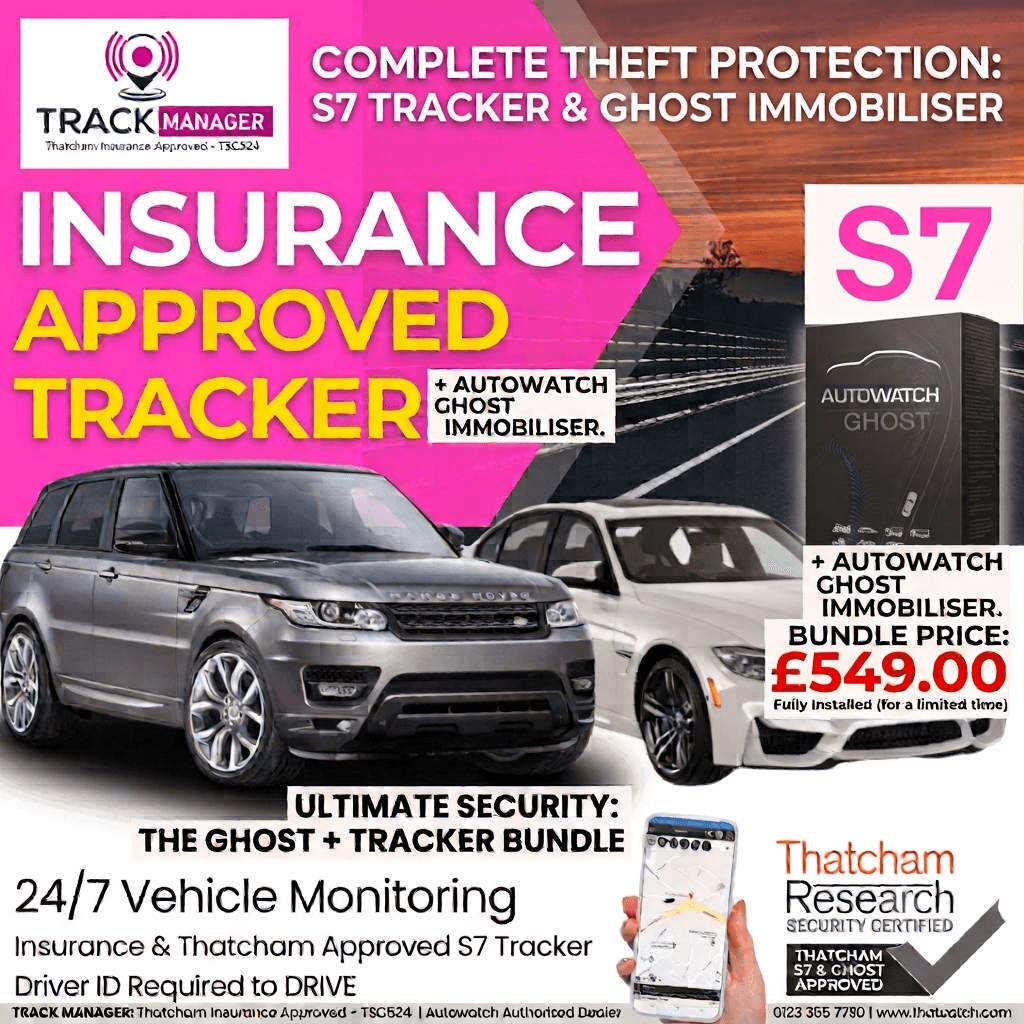
Nitro Pro + S7 Tracker — £649 Fitted
Our most popular bundle, and the right choice for most Mk8 and Mk8.5 Golfs, including the GTI, GTD and GTE. Full details on our immobiliser & S7 tracker package page.
Nitro Pro + S5 Tracker — £749 Fitted
The maximum-protection option. Choose this for a Golf R, a Clubsport, or any car where your insurer has asked for an S5. See the immobiliser & S5 tracker package page.
Both prices include the immobiliser, the tracker and mobile fitting at your home or workplace. A tracker subscription applies separately — £155 for 12 months or £14.99 a month, with discounted multi-year and lifetime plans available. The immobiliser has no subscription at all.
Mk8 or Mk8.5 — Does It Matter?
Both generations can be protected, and the package price is the same. We confirm the exact system for your car from the registration before you book. If your Golf is better suited to a different unit, we’ll say so — we also fit the Autowatch Ghost 3 at the same price, and you can see them side by side in our immobiliser comparison.
Fitted At Your Door — Essex, Hertfordshire & North London
Elite Car Security is a family-run, TASSA-approved installer (Member No. 0009) based in Cheshunt, with over 30 years’ experience. We come to you — home, work or wherever the Golf is parked — and both systems are fitted in a single visit, with a full handover of your tag, PIN and tracker app before we leave.
Chigwell is one of those places where you notice the cars before you notice the houses. Range Rovers, Sports and Velars, sitting on open driveways behind a low wall or a set of gates. Nice cars, nice roads, and — from a thief’s point of view — very easy to plan around.
We fit vehicle security across Essex, Hertfordshire and North London, and Chigwell comes up more than most places its size. Almost always the same conversation, and almost always the same car.
Why Range Rovers Keep Coming Up
It isn’t bad luck. A modern Range Rover is worth a lot, it’s in demand abroad, and until very recently the standard keyless entry system could be defeated in under a minute by two people with a relay kit — one stands near your front door picking up the key’s signal, the other stands by the car. The car thinks the key is in the owner’s hand. It unlocks, it starts, it’s gone.
Nothing is broken, no alarm sounds, and there’s often no CCTV footage worth anything because it takes less time than a delivery driver spends at your door. That’s why insurers have got so twitchy about this particular family of vehicles, and why some owners have found their premium climbing or their cover conditional on fitting something extra.
Chigwell has the added problem of being quiet and well-connected at the same time. Wide roads, big set-backs, mature trees, not much passing footfall after dark — and the M11 a few minutes away.
[ARTICLE GOES HERE]
Tony — paste me the headline and two or three lines from the EssexLive piece and I’ll write this section properly. It’s the local hook for the whole post: an Essex street expensive enough that residents pay for security guards says more about the area than any statistic I could quote. I just won’t summarise an article I haven’t been able to read.
What We Actually Fit
For a Range Rover on a Chigwell driveway, the answer is nearly always an Autowatch Ghost.
The Ghost is a CAN-bus immobiliser. It wires into the car’s own data network and stops the engine starting until a PIN sequence is entered using buttons the car already has — steering wheel controls, window switches, the indicator stalk. You choose the sequence. There’s no extra fob, no tag and no keypad.
That last part is the bit that matters. A thief with a relayed signal, a cloned key or even your actual key still can’t drive the car away, because there’s nothing to relay or clone. And because there’s no LED and no visible box, there’s nothing to tell them the car is protected until they’re already sitting in it wondering why it won’t start.
It doesn’t cut into the wiring loom, so it doesn’t affect your manufacturer warranty, and it can be removed cleanly if you sell the car.
Two Layers Rather Than One
Plenty of Chigwell customers go a step further and add a Thatcham-approved tracker alongside the immobiliser. They do different jobs: the immobiliser stops the car being driven off in the first place, the tracker gets it back if someone manages to move it on a flatbed.
If your insurer has specifically asked for an S5 tracker — and on a high-value Range Rover they often do — that’s a Thatcham category, not a brand, and we’ll fit and register one for you with the monitoring centre.
We Come to You
We’re based in Cheshunt and Chigwell is a short run for us. Fitting happens on your driveway or outside your office — your car never leaves you, and you’re not without it for a day while it sits in a workshop.
We’re TASSA approved, member number 0009, which means we’re vetted and every installation is registered. If your policy depends on who did the work, that matters. Family-run, over 30 years in the trade, and the person who quotes you is the person who fits it.
If you’re in Chigwell, Loughton, Buckhurst Hill or Woodford and you’d like a straight answer on what your car actually needs, call 03330 129 028 or get in touch. Tell us the make, model and year and we’ll tell you honestly what’s worth fitting — and what isn’t.
We get asked for a “TASSA immobiliser” most weeks. It’s a perfectly sensible thing to ask for, because the phrase is all over installer websites, including ours. But it hides a small misunderstanding that’s worth clearing up, because once you know what TASSA actually is, you’ll ask better questions of whoever you end up trusting with your car.
Short version: TASSA doesn’t make an immobiliser. It’s the organisation that tests the immobilisers, checks the companies that fit them, and keeps a record of every installation done by its members. When you buy a “TASSA immobiliser”, you’re buying a product that has passed that testing, fitted by an installer who has passed those checks. The badge is about the whole job, not just the box.
So what is TASSA?
TASSA stands for the Tracking and Aftermarket Security System Association. It’s an independent body for the aftermarket vehicle security trade, set up in 2018 by VSST Ltd. Its own description is that it exists to “independently verify vehicle security products, services and installations, helping consumers and industry identify trusted solutions with confidence”.
The reason it exists is a gap. For years, Thatcham Research was the name everyone knew for approving car security, and it still is for trackers, which is why you’ll see us talk about Thatcham S5 and S7 all over this site. But Thatcham stepped back from certifying aftermarket immobilisers and similar security products, and that left a whole category of kit, including the Ghost and the Nitro Pro, with no independent standard behind it. TASSA was created to fill that space and now works alongside insurers, police and manufacturers to do it.
If you want it from the source rather than from us, the TASSA website is at tassa.pro.
What TASSA actually checks
There are three parts to it, and all three matter.
The product. An immobiliser has to be verified against TASSA’s standards before it appears on the approved list. Those standards are built on product testing and ongoing analysis of how vehicles are actually being stolen, which is the part we care about most, because theft methods change every year and a standard that doesn’t move with them is worthless. The current verified list includes the Autowatch Ghost II, Ghost Pro and Ghost Pro FD, the Track Manager Nitro and Nitro Pro, and the Ampire WFS400 range.
The installer. This is the bit most people skip over, and it’s the bit that makes the biggest difference. A CAN-bus immobiliser is only as good as the person hiding it. TASSA carries out competency checks on the companies and individual technicians it registers, and it monitors compliance over the installations they carry out. A registered installer has been looked at, not just handed a logo.
The record. Every installation by a TASSA member goes onto the TASSA database. That gives an audit trail that TASSA describes as available to be checked around the clock: what was fitted, to which vehicle, by whom. If you ever need to prove to an insurer or a buyer that your car has a genuine immobiliser professionally fitted, that record is what proves it.
Why it matters to you
Three practical reasons.
Insurance. TASSA verification is what some insurers now look for on aftermarket immobilisers. Toyota Insurance Services, for example, approves the immobilisers on the TASSA list on the condition that they’re “installed by a TASSA registered installer”. Given how hard Toyota and Lexus hybrids are being hit at the moment, that’s not a small detail. We’d never promise you a discount, because every insurer is different and you should ask yours directly, but a TASSA-registered installation is the version of the story an underwriter is most likely to accept.
It weeds out the wrong installers. Anyone can buy an immobiliser online and fit it in a car park. Some of them are very good. Some of them leave the unit sitting behind a loose trim panel with the wiring visible, which a professional thief will find in under a minute. The TASSA badge doesn’t guarantee a perfect job, but it does mean someone independent has checked the company out and is watching what they fit.
Resale and proof. When you sell the car, “it’s got a Ghost” is a claim. A TASSA-registered installation is a record. Buyers and dealers increasingly know the difference.
How to check an installer
Don’t take the logo on a website at face value, ours included. TASSA publishes a public search tool at tassa.pro/find-tassa-installers, and its list of verified products is at tassa.pro/marketplace. Look the company up before you book. If they’re not on there and they’re telling you they’re TASSA approved, walk away.
For the record, Elite Car Security is TASSA member number 0009. We were one of the first companies through the door, and every Ghost and Nitro Pro we fit goes onto the TASSA database. You can read more about what that means on our TASSA Approved Installer page.
So which “TASSA immobiliser” should you have?
Now that you know the badge applies to the whole job, the question becomes which verified product suits your car. For most vehicles that comes down to the Autowatch Ghost II or the Nitro Pro, both TASSA verified, both £499 supplied and fitted, and both invisible once they’re in. The differences between them are real but fairly narrow, and we’ve written them up in our immobiliser guide so you can make the call yourself. If you’d rather just talk it through, that’s what the phone is for.
Call Elite Car Security on 03330 129 028, or get in touch here. We cover Essex, Hertfordshire and North London from our base in Cheshunt, with over thirty years in the trade and TASSA approval, member number 0009.
If you drive a modern car with keyless entry, you already know the feeling. You park up on your driveway, and somewhere in the back of your mind is the thought that a thief could be away with it in under a minute without ever touching your keys.
That worry is well founded. Keyless vehicle theft is one of the most common ways cars are stolen in the UK, and the counties we cover — Essex, Hertfordshire and North London — sit on exactly the road network that makes a stolen car easy to move quickly.
There is a lot of advice online about how to stop it. Most of it is fine as far as it goes. The problem is that almost all of it is written by people who cannot actually secure your car for you. This guide explains what the thieves are really doing, why the usual tips only take you part of the way, and what genuinely works.
How keyless car theft actually works
There are three methods worth understanding, because the defence against each one is different.
Relay attack
This is the one most people have heard of. Your key fob is constantly listening for your car. Two thieves work as a pair: one stands near your house with a device that picks up the fob’s signal through your wall, and relays it to a second device held by their partner at the car. The car believes the key is next to it, unlocks, and starts.
It takes seconds, it is silent, and it leaves no damage. Many owners only realise what happened when they see the driveway empty in the morning.
Watch: keyless theft, and what actually stops it.
CAN injection
A newer and more serious method. Rather than chasing your key at all, the thief gains access to the vehicle’s wiring — often through a headlight unit, a wing mirror or another accessible point — and plugs a device directly into the car’s CAN bus network. That device sends the car a fake message telling it a valid key is present.
This matters, because a Faraday pouch does nothing at all against it. Your keys can be sitting in a metal box at the back of the house and the car will still start.
Key cloning and OBD programming
Once inside the vehicle, a thief can plug equipment into the OBD port and program a blank key to the car. From that point they have a working key and can come back for the vehicle whenever they choose.
Why the standard advice is not enough
Search for advice on keyless theft and you will be told to use a Faraday pouch, keep your keys away from the front door, turn off the fob’s wireless signal if your car supports it, and fit a steering wheel lock. None of that is bad advice, and we would encourage all of it. But be clear about what each measure does and does not do.
A Faraday pouch defeats a relay attack only. It has no effect on CAN injection or key programming, and it only works if it is used every single time, by everyone in the household, including with the spare key.
Keeping keys away from the front of the house reduces the chance of a successful relay, but relay equipment has improved and distance alone is not a guarantee.
A steering wheel lock is a visible deterrent, which has real value — a thief looking for an easy target may move on. But a determined, equipped thief can defeat one, and it does nothing to stop the engine starting.
The honest summary is this: the standard advice makes your car a slightly less attractive target. It does not make it undriveable. If someone has specifically chosen your vehicle — and organised theft is increasingly to order, by make and model — you need something that stops the car moving and something that finds it if it does.
The three-layer approach
Proper vehicle security works in layers. Each layer does a different job, and each one covers a weakness in the others. This is how we approach every installation.
Layer one: an aftermarket immobiliser
This is the layer that actually stops the theft. A modern aftermarket immobiliser communicates with your vehicle’s CAN bus network and prevents the engine from starting — or the car from being driven away — unless the correct sequence is entered or the correct driver tag is present.
The important part is that it is not defeated by any of the three attacks above. It does not care whether the thief has relayed your key, injected the CAN bus or programmed a blank fob. Without the sequence or the tag, the car does not go anywhere.
There is no key fob to lose, nothing to remember to switch on, and no change to how you use your car day to day. It arms itself automatically. Systems of this type are typically operated either by a PIN sequence entered on buttons you already have in the vehicle, or by a small driver tag carried on your keyring. The Autowatch Ghost, Nitro Pro and Scorpion X all work on this principle, with differences in how they are operated, what they cost and what accreditation they carry. The Ghost II and the Nitro Pro are TASSA approved; the Scorpion X is not, so if your insurer specifies a TASSA-approved system, it is one of the first two.
We fit several brands rather than being tied to one, which means we recommend based on your vehicle and how you use it rather than on what we happen to stock. If you want to see the differences side by side, our immobiliser comparison sets them out.
Layer two: a Thatcham S5 or S7 tracker
An immobiliser stops the car being driven away. It cannot stop a vehicle being winched onto a flatbed, which is exactly what an organised team will do when they find they cannot start it. That is what the tracker layer is for.
Thatcham categories are the industry standard and the ones insurers recognise:
Thatcham S7 is a tracking and recovery system, providing location monitoring and alerts if the vehicle moves without authorisation.
Thatcham S5 adds driver recognition. The system knows whether an authorised driver tag is present, so if the car moves without one, that is treated as an unauthorised movement and escalated immediately. S5 is often the category insurers ask for on higher-value vehicles.
This is the layer most installers do not offer, and the one we think makes the real difference on a high-value vehicle.
Organised thieves increasingly sweep a stolen vehicle for tracking devices before moving it any distance, and they know where a hardwired unit takes its power from. A self-contained battery-powered S7 tracker has no wiring to follow and no permanent power draw to trace, which makes it far harder to locate than a hardwired device.
We would not claim any device is impossible to find — anyone who tells you that is overselling. What we will say is that when a vehicle is swept and the obvious system is removed, a second independent unit that shares none of the same characteristics is often the thing that gets the car back.
As a matter of policy we do not publish photographs of installed units or describe where any device is fitted. That information only helps the wrong people.
What this looks like in practice
Not every car needs all three layers, and we will tell you honestly where the sensible stopping point is for your vehicle.
For most family cars and vans, a quality immobiliser on its own is a significant step up and is often all that is needed.
For vehicles that are known theft targets, or where an insurer requires it, an immobiliser plus a Thatcham S5 or S7 tracker is the standard combination — we offer this as a combined immobiliser and S5 tracker package.
For high-value vehicles, or where a customer has already been targeted, we would add the battery-powered backup as a third layer.
Where we fit
We are a mobile installer, so we come to your home or workplace and fit on your driveway. Based in Cheshunt, we cover Essex, Hertfordshire and North London, including Romford, Brentwood, Chelmsford, Basildon, Epping, Chigwell, Loughton, Braintree, Hertford, Ware, Broxbourne, Hoddesdon, Potters Bar, St Albans, Watford, Enfield, Barnet, Edmonton and the surrounding areas.
Elite Car Security is a family-run business with over 30 years of experience, and a TASSA-approved installer — Member No. 0009. TASSA approval matters because it means our work is independently vetted, and insurers recognise it.
Common questions
Will fitting an immobiliser affect my warranty?
Fitted correctly, no. We install to a standard that does not interfere with manufacturer systems, and we do not cut into factory wiring unnecessarily.
Do I need to remember anything each time I drive?
No. The system arms itself when you leave the vehicle. Depending on which type you choose, you either carry a small tag or enter a short sequence using buttons already in the car.
Will my insurer reduce my premium?
Some do, some do not, and it varies by insurer and vehicle. What is more common is an insurer requiring a specific Thatcham category as a condition of covering a particular car at all. Always check with your insurer before you buy.
How long does installation take?
Most immobiliser installations take around two to three hours. Adding a tracker extends that. We will give you a realistic time when we book, and we call ahead on the day.
Talk to us
If you would like an honest recommendation for your vehicle, get in touch. We will ask what you drive, where it is parked overnight and what your insurer has asked for, and tell you what we would fit and why.
Picture a parking fine landing on your doormat for a street you have never driven down, or a speeding notice from a town you have never visited. For a growing number of drivers across Essex, Hertfordshire and North London, that is exactly what is happening — and it starts with the two plates bolted to your car.
Plate theft is climbing fast
DVLA figures obtained by Churchill Motor Insurance show 7,381 number plates were stolen in the UK in 2025, up 30% on the year before and more than double the 3,376 taken in 2021. Cloning — where a criminal copies your registration onto another car — has risen 53% since 2021.
Why thieves want your registration
A stolen or cloned plate lets a criminal dodge speed cameras, congestion and clean air charges, and parking fines — all of which then land on you. A BBC investigation found London councils cancelled tens of thousands of penalty charges linked to cloned vehicles, with one borough tracing nearly 2% of its parking tickets to cloned cars.
The link to car theft most people miss
There is a darker side. Thieves often clone a plate from a car identical to one they have just stolen, so the stolen vehicle can be driven, sold or shipped without raising a flag. If your make, model and colour are common on the driveways of your street, your registration is worth copying.
The cheap fix — and its honest limit
Protecting the plates themselves is genuinely cheap. A set of tamper-resistant screws costs a few pounds and makes a plate far harder to unbolt in seconds. We would rather tell you that plainly than sell you something you do not need. But a screw protects the plate, not the car — and if a thief wants the vehicle on your drive, they are not coming for the number plate.
Keeping the actual car where it belongs
Most cars in our area are now taken electronically, without the keys, in under a minute. That is where a properly fitted immobiliser earns its place. An Autowatch Ghost or a Nitro Pro immobiliser adds a PIN sequence through the car’s own buttons that must be entered before the engine will start — so even a thief holding a cloned key gets nowhere. Both are £499 fitted, TASSA approved, and installed on your driveway.
Talk to us
Fit a set of anti-theft screws to your plates, then think about the car itself. If you would like an honest opinion on what your vehicle actually needs, call us on 03330 129 028 or message us on WhatsApp. We cover Essex, Hertfordshire and North London, and we come to you.
The Mk8.5 Volkswagen Golf is one of the sharpest hot hatches VW has ever built — and unfortunately, thieves know it. Golf GTI and Golf R models remain high on the target list for keyless relay attacks, CAN injection and key cloning, and the standard factory security simply wasn’t designed to stop the tools being used today.
So when a customer asked us what the best all-round protection was for their Mk8.5 Golf, our answer was the Nitro Pro Plus CAN-IMMO — and here’s exactly why.
Most security products do one job. The Nitro Pro Plus stacks several defences on top of each other, so if a thief gets past one, there’s another waiting. That layering is what makes it so hard to beat.
1. A TASSA-approved CAN bus immobiliser
The Nitro Pro Plus is a PIN-code immobiliser that talks to your Golf over the CAN bus. There’s no key fob to clone, no LED to give it away, and nothing for a thief to find and cut out. To drive the car, you enter a personal PIN sequence using buttons already in the cabin — the steering wheel controls, pedals or console switches. Get in without that sequence and the car simply will not start.
Because it’s fully TASSA approved and installed by a TASSA-accredited installer, the fit is logged on the national TASSA database — which is what insurers want to see.
2. Horn activation after 15 seconds
This is the feature people are always surprised by. If someone gains entry and fails to enter the correct PIN, the system gives them 15 seconds — then sounds the horn. No thief wants attention, and a car making noise on a quiet street at 3am is a car they walk away from. It turns a silent, discreet immobiliser into an active deterrent the moment it’s challenged.
3. Live GPS tracking
The Plus system adds GPS tracking with a smartphone app, so you can see exactly where your Golf is at any time. Useful for peace of mind, invaluable if the worst happens — and handy day to day if the car’s shared between family members or used for work.
4. Remote immobilisation from the app
This is the one that changes everything. If your car is moving and it shouldn’t be, you can immobilise it from your phone. You don’t need to wait for a tracking company call centre, and you don’t need to be anywhere near the vehicle. Tap, and the car stops being useful to whoever has it.
Why it’s the best bang for buck
Buy those four things separately and you’re looking at a Thatcham-approved tracker with an annual subscription, plus a standalone immobiliser, plus an alarm upgrade. The Nitro Pro Plus rolls all of it into one professionally installed system at a fraction of that cost.
For a Golf GTI, a Golf R, or a hard-working VW Caddy, that’s a serious amount of protection for the money. It’s the system we’d fit to our own vehicles — and that’s the honest test we apply to everything we recommend.
Fits more than just the Golf
The Nitro Pro Plus is CAN-compatible across a huge list of Volkswagen Group vehicles, including:
Volkswagen Golf GTI, GTD, GTE and Golf R (Mk7, Mk8 and Mk8.5)
Volkswagen Caddy and Transporter
Volkswagen Tiguan, T-Roc, Passat, Arteon and ID range
Audi, SEAT, Cupra and Škoda models sharing the same platforms
If your vehicle isn’t listed, get in touch — we’ll check compatibility before you commit to anything.
Mobile installation across Essex, Hertfordshire and North London
We come to you. Home, work, wherever the car is parked — the install is done properly at your kerbside with no need to drop the vehicle anywhere. Elite Car Security is a family-run, TASSA-approved business (Member No. 0009) with over 30 years of experience fitting vehicle security, and because we’re independent we’ll always recommend the system that genuinely suits your car and budget rather than the one we’re told to sell.
Get a price for your Golf
Want the Nitro Pro Plus on your Mk8.5 Golf? We’ll give you a straight answer on compatibility, price and availability.
Keyless theft is now the number one way cars are stolen round here, and around 60% of car thefts in London involve electronic gadgets that copy your key’s signal or plug straight into the car’s wiring. A new law (the Crime and Policing Act 2026) has made it illegal even to possess these relay devices, but the gangs using them haven’t gone away. If your car has keyless entry, it can be unlocked and driven off in under a minute while your key sits safely indoors.
The fix: an Autowatch Ghost immobiliser stops the car being driven even with a cloned key or relay box. It hides in the wiring with no fobs or LEDs to give it away, and the engine simply won’t start until your personal PIN is tapped in on the car’s own buttons.
Summer offer prices apply while our current promotion lasts — call to check today’s pricing.
We’re family-run, TASSA and Thatcham approved, with over 30 years in the trade, and we come to you: mobile fitting at your home or workplace across Essex, Hertfordshire and North London.